Artist
O-Zone (3)
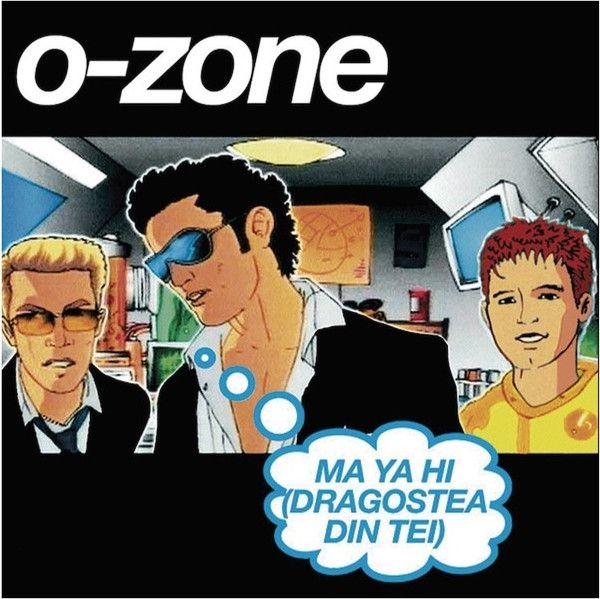
O-Zone's origins trace back to 1998 when Dan Bălan, a young musician from Chișinău, Moldova, decided to form a new musical project. Bălan came from a privileged background; his father Mihai Bălan was a Moldovan diplomat, and his mother Ludmila Bălan worked as a television presenter. Despite his parents' wishes for him to pursue law, Bălan's passion for music prevailed. He had received his first instrument, a second-hand accordion, at age 11 and began writing his own compositions, including waltzes. Before forming O-Zone, Bălan was involved in a gothic doom metal band called Inferialis, where he served as songwriter and keyboard player. However, he never truly identified as a heavy metal musician, instead viewing himself as a producer interested in exploring various musical styles. In 1998, after Inferialis disbanded, Bălan recorded his first solo song "De la Mine" and began experimenting with a more commercial pop sound. That same year, Bălan formed O-Zone with Petru Jelihovschi, the former vocalist of Inferialis. The duo released their debut album "Dar, Unde Ești..." ("But, Where Are You...") in 1999. The album became a commercial success in Moldova, with seven of its ten songs reaching number one on major Moldovan radio stations. During this period, Bălan also became a producer for a children's television show called "Tanti Ludmila Show," hosted by his mother, for which he provided the title song. Despite the duo's initial success, the partnership was short-lived. Jelihovschi did not intend to make music his full-time career and viewed O-Zone primarily as a hobby. Shortly after the album's release in 1999, Jelihovschi departed from the group to pursue a career in television, leaving Bălan to continue the project alone. Undeterred by Jelihovschi's departure, Dan Bălan organized open auditions to find new members for O-Zone. At one such audition, he met Arsenie Todiraș, born on July 22, 1983, in Chișinău, Moldova. Todiraș came from a modest background; his mother worked as a doctor and his father as an engineer. He had been passionate about music from a young age, often listening to Russian music and joining the Moldovan folk band Stejareii at age 16, where he played the contrabass. At 17, Todiraș began taking singing lessons with renowned Russian opera singer Larisa Shulga, who became one of the most influential figures in his life. During the audition for O-Zone, Todiraș performed Elvis Presley's "Love Me Tender," which initially left Bălan skeptical. However, Todiraș's vocal abilities and stage presence eventually won him over, and he passed the audition. Bălan and Todiraș initially planned to continue as a duo. However, after the auditions had concluded, Bălan received a call from Radu Sîrbu, who wanted a chance to try out for the group. Radu Sîrbu, born on December 14, 1978, in Peresecina village in the Orhei region of Moldova, had spent his childhood in various Moldovan cities including Orhei and Bălți. His mother worked at the Cultural Center in his hometown, which fostered his early connection to music. During high school, Sîrbu worked as a DJ at his father's nightclub and organized musical theatre shows through his studio "Artshow," which he created for children and teenagers. After graduating in 1996, he began studies at the Chișinău Music Conservatory while also teaching vocal classes to children on the side. Despite having missed the initial auditions, Bălan agreed to give Sîrbu a chance. After a successful audition, Sîrbu joined O-Zone, officially making the group a trio in 2001. The three members complemented each other perfectly: Dan Bălan served as the group's founder, producer, and primary songwriter; Arsenie Todiraș, the youngest member at 17, brought youthful energy and strong vocals; and Radu Sîrbu contributed his vocal skills and production experience. Together, they formed the lineup that would soon achieve unprecedented success. With the new trio lineup established, O-Zone released their second album "Number 1" in 2002. The album featured songs that would become hits in both Moldova and Romania, including "Numai Tu" ("Only You") and "Despre Tine" ("About You"). While "Number 1" enjoyed moderate success in Moldova, the group recognized that they needed to expand beyond their small home country to achieve greater recognition. In 2002, seeking to broaden their audience and access larger music markets, O-Zone made the strategic decision to relocate from Chișinău to Bucharest, Romania. This move proved to be transformational for the group. Moldova and Romania share deep cultural and linguistic ties; Moldova was part of Romania until World War II, and 65 percent of Moldova's population of 4.5 million is ethnically Romanian. The groups' music, sung in Romanian, was immediately accessible to Romanian audiences. In Bucharest, O-Zone quickly became an overnight sensation. Their clean cut appearances, melodious songs, and warm singing voices—spiced with a hint of their native Moldovan accents,resonated strongly with Romanian youth. In February 2003, their song "Despre Tine" ("About You") topped Romania's Top 100 chart for three consecutive weeks, establishing O-Zone as a major force in Romanian pop music. The track was so successful that it was later re-released across Europe, where it found similar success. At the 2002 MTV Romania Music Awards, O-Zone won the Best Music Video award, further cementing their status in the Romanian music industry. Member Arsenie Todiraș later explained the secret of their appeal to RFE/RL: "We think that the secret of our success is a little originality; we are young, good looking boys, we are being natural, we are doing what we feel like doing and we guess we are giving out a lot of positive energy,that's what we hope we're doing. And we are working very hard." Following the success of "Despre Tine," O-Zone prepared to release what would become their defining song. "Dragostea din tei," loosely translated as "Love from the Linden Tree" or "The Love from the Linden Tree," was written by Dan Bălan and produced by Bogdan Popoiag. Released in Romania around June 2003 as the lead single from their third studio album "DiscO-Zone," the song was a inspired track that blended dance-pop, Eurodance, Eurodisco, Europop, and synth-pop elements. "Dragostea din tei" initially topped the Romanian singles chart for four consecutive weeks in September 2003. However, by the end of 2003, the song had faded from popularity in its home market. What happened next, however, would transform O-Zone from regional stars into an international phenomenon. In early 2004, the song gained unexpected attention in Italy when a little-known Italian duo called Haiducii released a cover version of "Dragostea din tei." This cover topped the Italian pop charts, sparking curiosity about the original artist. Arsenie Todiraș later stated that while not technically illegal, Haiducii's cover felt like "a betrayal" because the group had not asked permission to create it. However, the cover's success had an unintended positive consequence: it led to widespread interest in finding out who had created the original song. Time Records, an Italian record label, quickly offered O-Zone a one-year contract. Soon after the song's release in Italy, it was also released in various other countries across Europe under Polydor Records and became an instant hit. Radio deejays across Europe began reporting that "Love Under the Lime Tree" had the potential to become a major summer hit across the continent. By 2004, "Dragostea din tei" had achieved unprecedented success, topping the singles charts in 12 European countries including France, Germany, Spain, Austria, Switzerland, Netherlands, Norway, Belgium, Sweden, Ireland, and the Czech Republic. In France alone, the song spent multiple weeks at number one. The track was recognized as the best-selling single in Europe in 2004, and in 2005, it achieved the same status in Japan. O-Zone found themselves suddenly in demand across the continent. As Radu Sîrbu recalled in interviews, the touring schedule became so intense that the group could barely sleep. They performed in different cities night after night, catching sleep on planes during flights between shows. The three young Moldovans found themselves playing to packed venues from Paris to Madrid, Rome to Prague, and Moscow to Athens. Riding the wave of "Dragostea din tei"'s success, O-Zone's third studio album "DiscO-Zone" (2003) became a massive commercial success across Europe. The album went platinum and sold over 3 million copies worldwide, with over 2.5 million copies of the album sold globally according to official figures. In 2003, O-Zone received the Double Gold Disc award in recognition of their sales achievements. The album featured a collection of upbeat dance-pop tracks that showcased O-Zone's signature sound: infectious melodies, catchy hooks, electronic beats, and Romanian lyrics delivered with energy and charisma. Beyond "Dragostea din tei" and the re-released "Despre Tine," the album included other popular tracks that further established the group's musical identity. However, O-Zone achieved unexpected fame in America through an internet phenomenon. In December 2004, a New Jersey resident named Gary Brolsma uploaded a video of himself sitting in front of his webcam, lip-syncing and dancing to "Dragostea din tei" using only his arms and upper body. The video, titled "Numa Numa Dance," became one of the first major viral videos on the early internet, receiving millions of views and leading to Brolsma making appearances on popular U.S. television shows including The Tonight Show and Good Morning America. While the viral video helped boost awareness of "Dragostea din tei" in the United States and gave the song moderate airplay, most Americans knew it simply as the "Numa Numa Song" without ever learning the name of the original track or the group that performed it. Despite this cultural impact, O-Zone never achieved the commercial success in America that they enjoyed in Europe. O-Zone's success had significant implications for the promotion of Romanian language and culture on the global stage. The Romanian newspaper Libertatea remarked that "Dragostea din tei" had "done more for Romania's image than all politicians put together." Dan Bălan himself stated that his greatest source of pride was promoting the Romanian language through the song. Author Paul Brummell commented that the song's inclusion as a track of Moldovan origin underscored the prevailing perception that the ethnic Romanian community of Moldova shares a common cultural space with Romania. When asked whether O-Zone considered itself Romanian or Moldovan, Todiraș diplomatically responded: "We come from the Republic of Moldova, from the former Romanian region of Basarabia, but we launched our careers in Romania, and we wrote our songs for the Romanian market. Anyway, Moldova and Romania are together, you know—this is one Romania, the Greater Romania. We are together ,we are Moldovans who shot to fame in Romania and then in Europe." For Moldova specifically, the group's international success represented a watershed moment. Yle's Tuukka Tuomasjukka wrote that "Dragostea din tei"'s widespread popularity signified a cultural shift, ushering Moldova into the European cultural landscape in an unprecedented manner following its period as part of the Soviet Union. At the height of their success, on January 13, 2005, O-Zone shocked fans and the music industry by announcing their disbandment. The official statement cited "personal reasons" and the members' desire to focus on their respective solo careers. However, the circumstances surrounding the breakup were more complex than the official explanation suggested. According to various reports and interviews, tensions had been building within the group regarding financial arrangements and creative direction. As the founder, producer, and primary songwriter, Dan Bălan felt that the revenue should not be divided equally among the three members. In interviews, Radu Sîrbu recalled that Bălan had suggested it was "wrong to divide the money equally" because he wrote the songs and "moved the project," meaning he should receive a larger share. These financial disagreements reportedly led to conflicts and misunderstandings within the group. The situation became untenable despite O-Zone's continued commercial success and demanding tour schedule. Rather than resolve these internal disputes, the members chose to end the project while they were still at their peak, with their 2005 albums recognized as among the best-selling records of that year. Radu Sîrbu later reflected on the breakup as an important life experience, suggesting that the circumstances taught him valuable lessons about the music industry and professional relationships. The timing of the disbandment,coming at the height of the group's popularity,surprised many observers and left fans wondering what additional success O-Zone might have achieved had they stayed together. Despite the circumstances of their 2005 disbandment, the members of O-Zone have occasionally reunited for special performances. In 2017, the original trio came together for concerts in Chișinău, Moldova, and Bucharest, Romania, giving longtime fans the opportunity to see them perform together once again. These performances featured their classic hits and demonstrated that, despite their individual career paths, the members maintained a connection to their shared history. In 2019, O-Zone reunited again for a concert in Bucharest, Romania. According to social media posts by the members, they have maintained generally good relationships over the years, occasionally sharing photos from their O-Zone days and commenting on each other's current projects. While creative differences and financial disputes led to the original breakup, the members appear to have reconciled their personal relationships over time. In 2024, O-Zone announced plans for a summer tour in Europe. However, this tour took an unexpected form: rather than a full reunion of all three original members, the tour was organized as a tribute band consisting of Arsenie Todiraș as the only original member performing alongside two dancers. This unusual arrangement suggested that while the O-Zone name and legacy remain commercially viable, the full reunion that many fans hoped for remains elusive. The decision to proceed with a tribute format rather than a full reunion likely reflects ongoing differences between the members regarding how to handle the O-Zone legacy. Dan Bălan's release of "Numa Numa 2" in 2018 without involving the other members demonstrated his willingness to work with O-Zone's musical heritage independently. Meanwhile, Radu Sîrbu has focused primarily on production and family life, appearing less interested in extensive touring commitments.
Data provided by Discogs